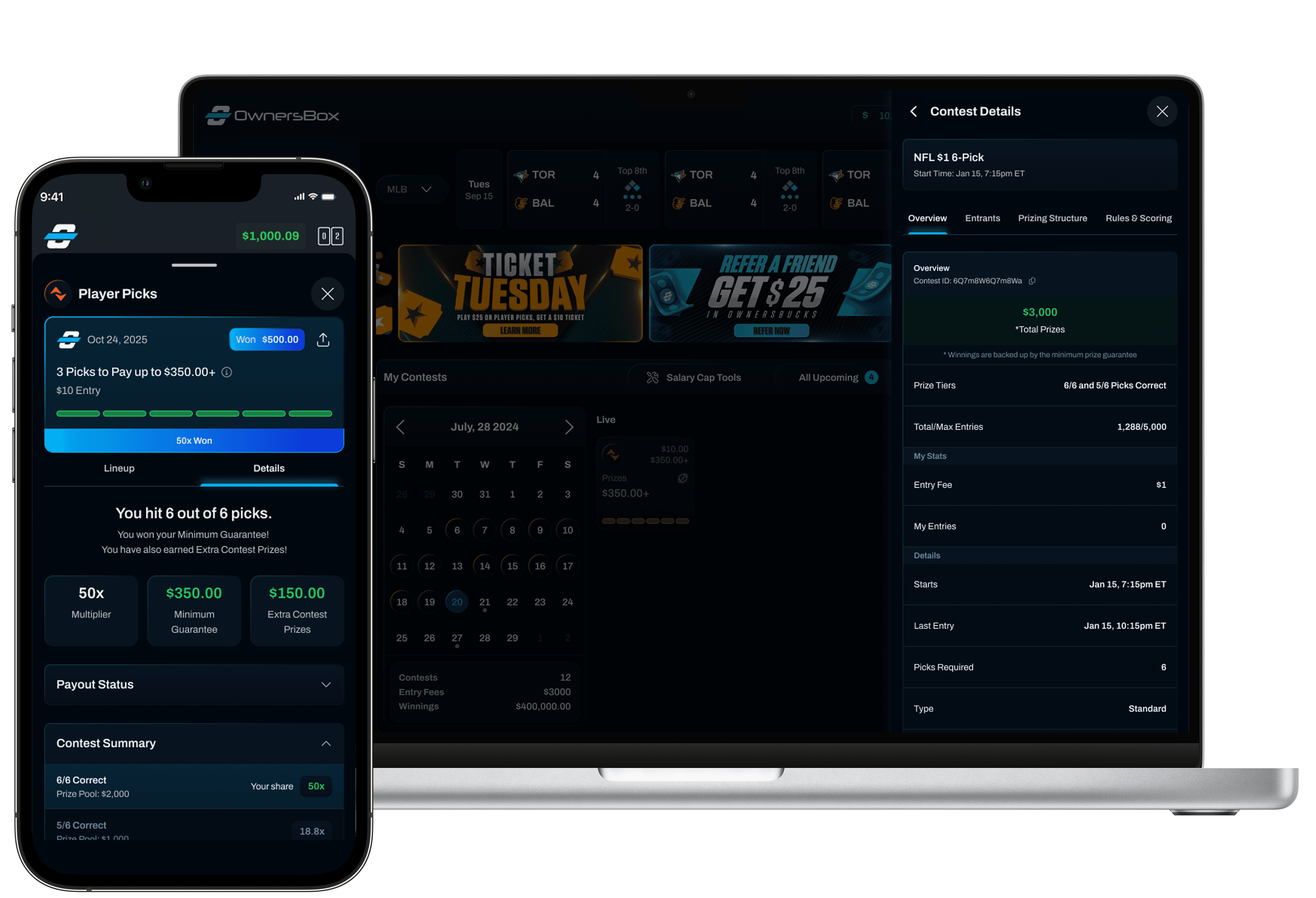
Project Details
Duration
17 Weeks (Ongoing)
Core Team
1 Designer
2 PMs
2 Developers
Role
Product Designer
Category
Career
Overview
The peer-to-peer (P2P) pick’em project began as a question from our CEO: “How might we build a compliant P2P contest that helps us reach more states?” This question set off an extensive discovery process to understand compliance, analyze competitors, and define a model that aligns with both user and business needs.
At its core, the project aimed to deliver a game model that felt familiar to casual players while opening major growth opportunities for the company through compliance-driven design.
Our Process
Discovery and Research
I started by exploring how existing P2P products worked. Starting by studying user help guides, compliance requirements, and real world implementations across competitors like PrizePicks and DraftKings Pick6. I reviewed rules, app experiences, and feature sets, then consolidated everything into an internal presentation to align our leadership and product teams on opportunities and risks.
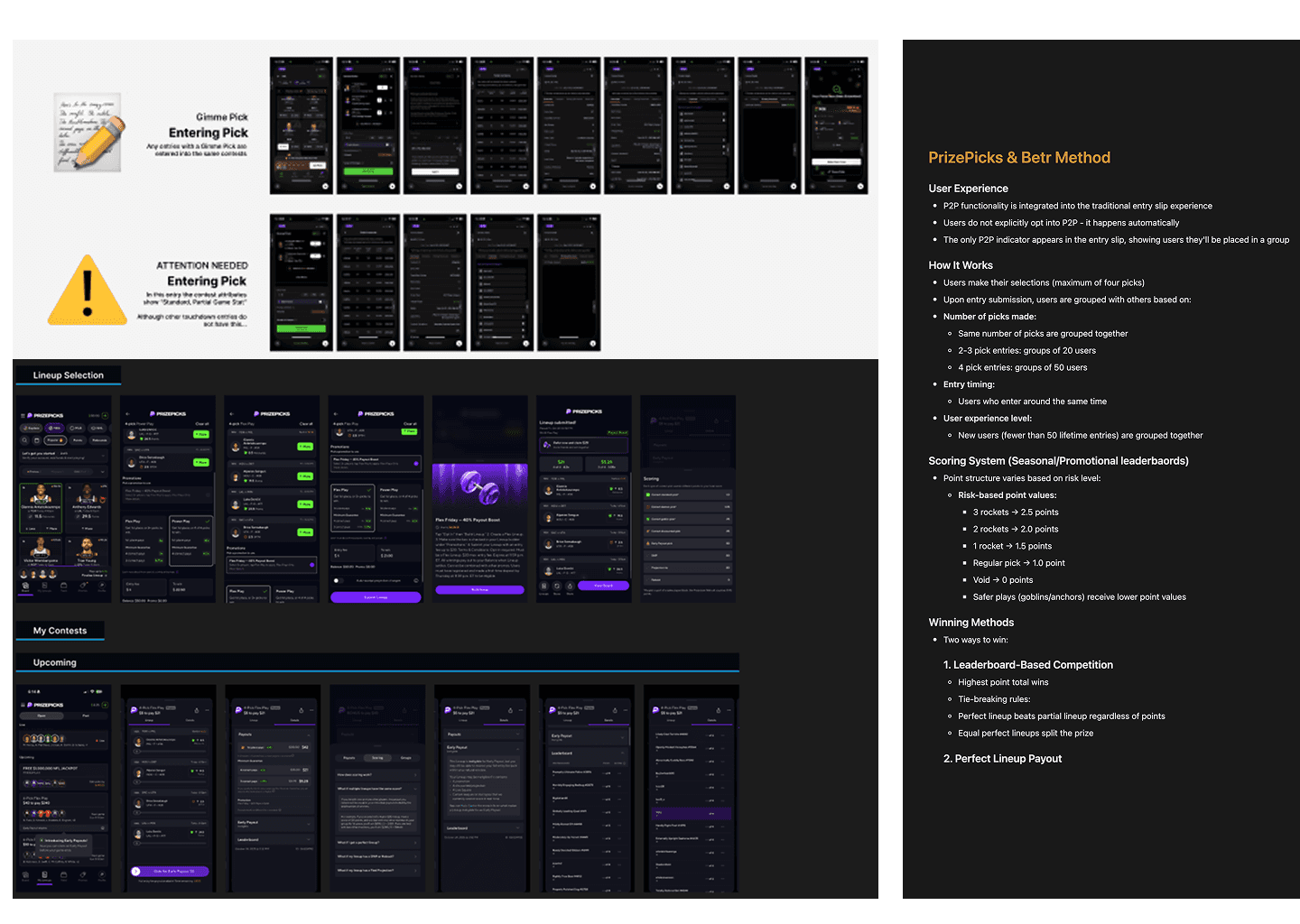
To complement the audit, I analyzed public sentiment via Reddit threads, Twitter discussions, and App Store reviews. I wanted to understand what real users thought of P2P gaming and whether they could identify the model they were playing in. Most players couldn’t identify any specific peer to peer features. That insight would shape how we later simplified context and visibility in our own experience.
Defining the Models
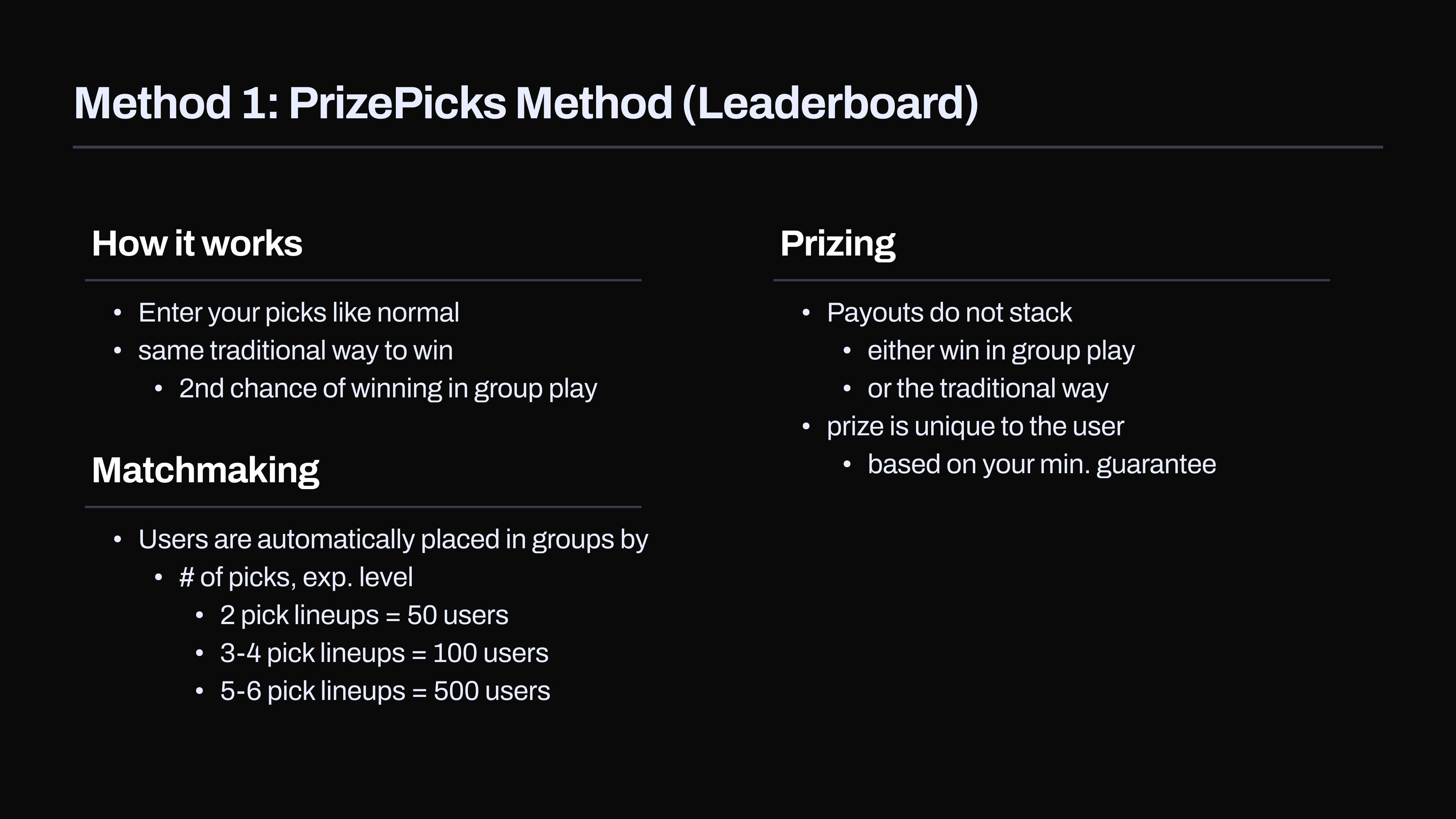
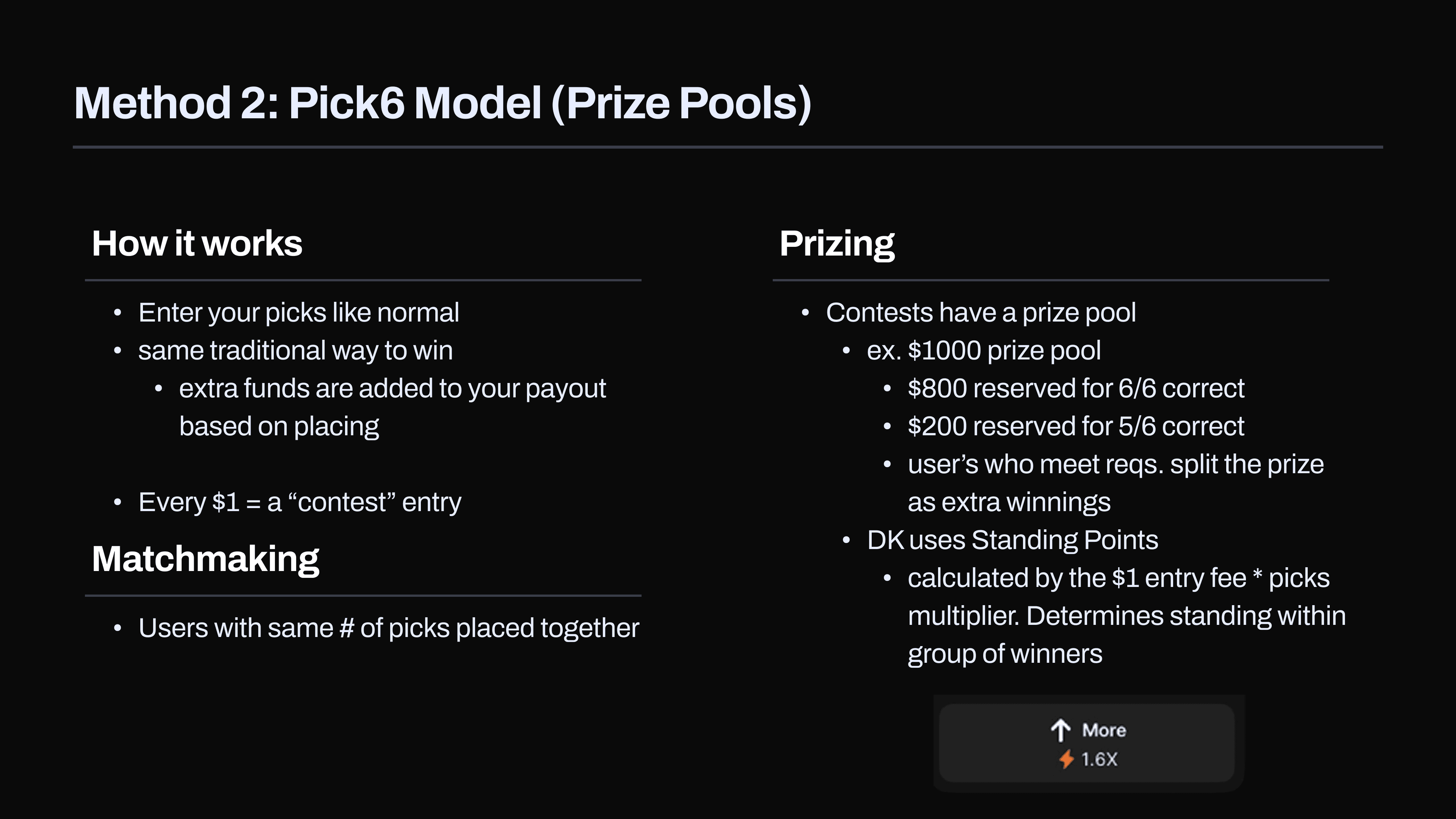
The research led to two suitable directions
Leaderboard-based model: Competitive and skill-focused, but less flexible in terms of payout structure.
Prize pool model: More compliant and perceived as fairer among users since multiple participants could share winnings.
I created a presentation outlining my findings and shared both directions to the team. Early discussions made it clear that maximizing compliance had to be our priority.
User Research
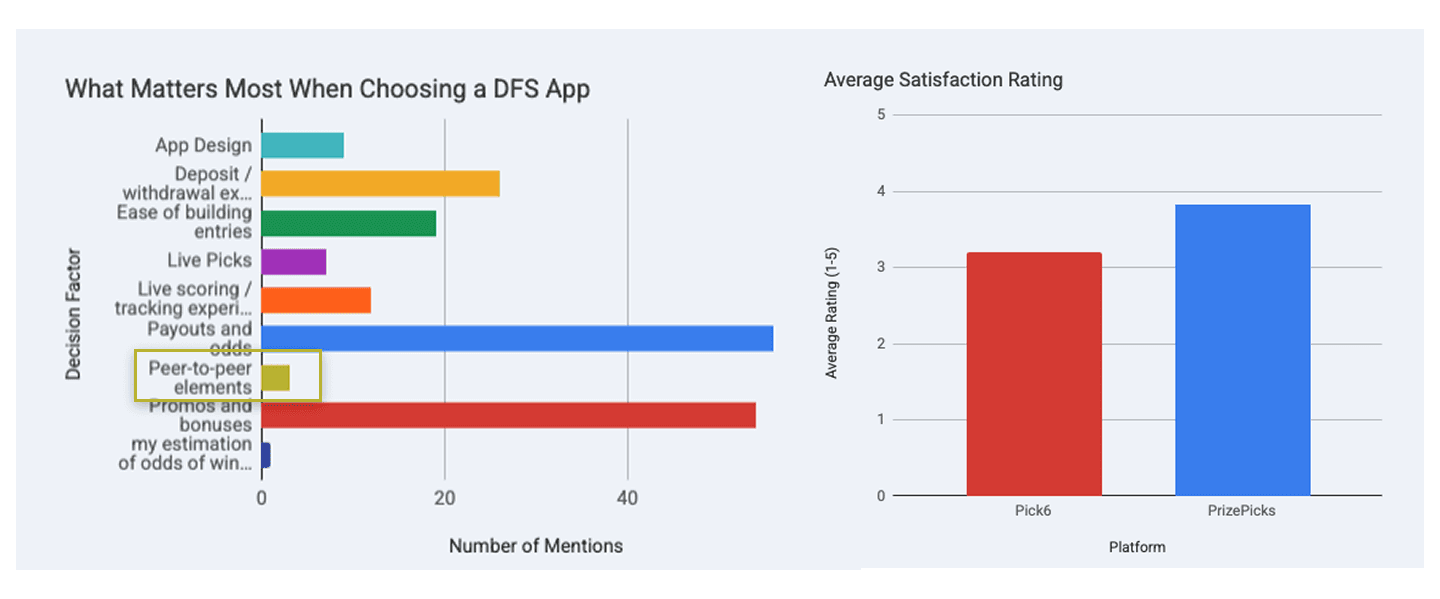
We ran a targeted survey with existing users who had played on peer-to-peer platforms in the past 3 months. Over 300 responses came in. Many users expressed positive sentiment toward PrizePicks and DraftKings Pick6, but most couldn’t identify that they were actually playing peer-to-peer games.
I filtered out biased entries from promo hunters and synthesized clean data. Results showed minimal difference in preference and understanding around DraftKings’ prize pool format, which influenced our decision to move forward with that direction.
Conclusion: The survey results showed that peer-to-peer elements had little impact on the overall user experience. Participants also expressed no clear preference between competitors, indicating that shifting to a more compliant prize pool model wouldn’t negatively affect the experience.
Design and Iteration
As the sole designer, I was a part of the end-to-end process from initial concept to final dev-ready screens. I began by exploring the leaderboard model, key flows from competitors, and identifying compliance-driven elements that informed our first iterations.
We held weekly cross-functional reviews with development, product, and compliance. Conversations often focused on balancing compliance transparency with user simplicity. When we pivoted to the prize pool model, I led the design, working closely with development and product to address technical constraints.
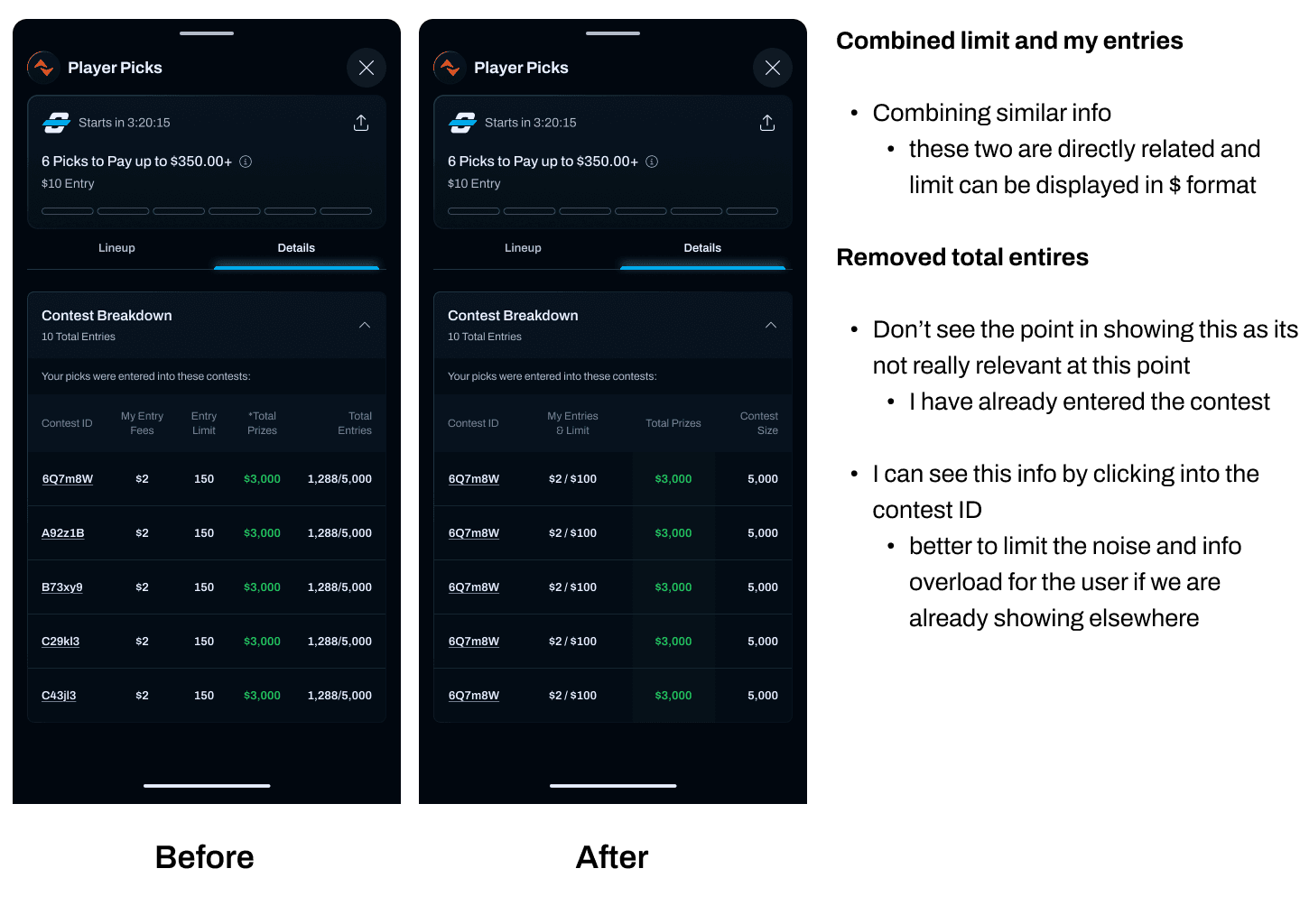
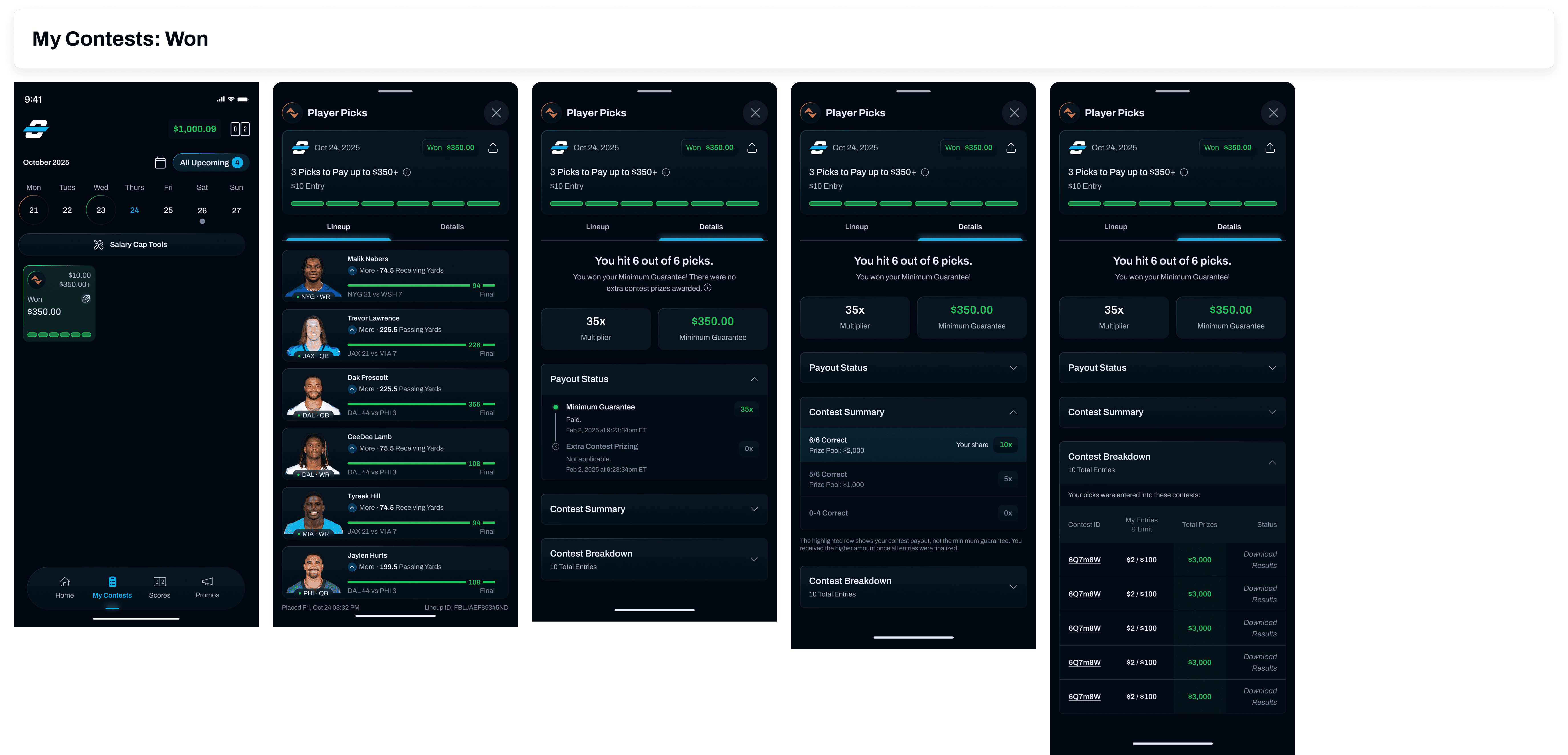
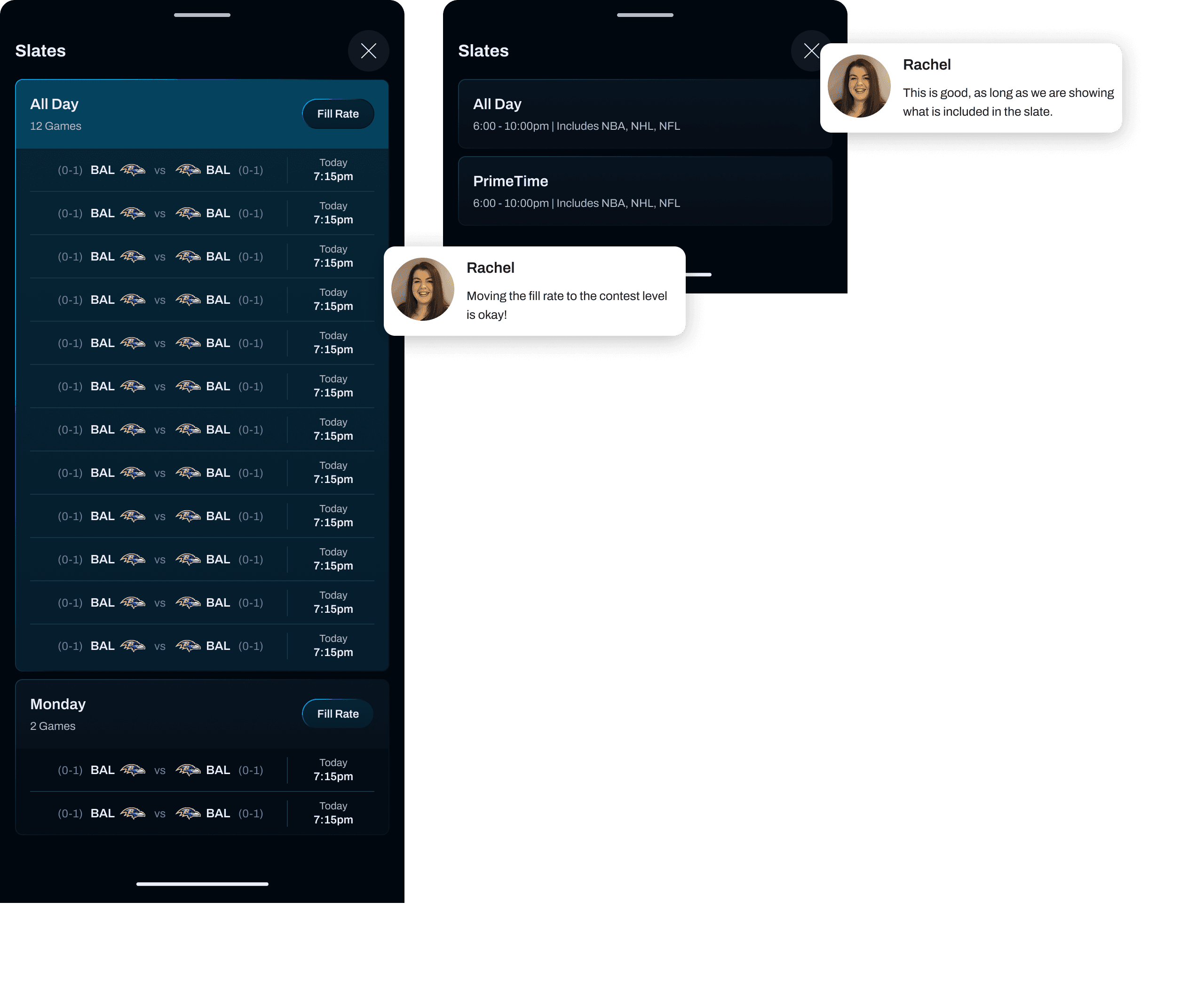
One key learning emerged during internal testing: users preferred a less intrusive experience. Competitors were trending toward simpler interfaces, and our own flows validated that approach. I iterated by stripping back unnecessary contest-level data (i.e. fill rates, slates, and entry details) and moved some information to secondary surfaces, creating a cleaner and more approachable experience.
This was significant as 50% of our users are identified as Casuals. The remaining 50% are made up of Regular, Whale, Sharp, Promo Hunter, New Player, Discount Hunter.
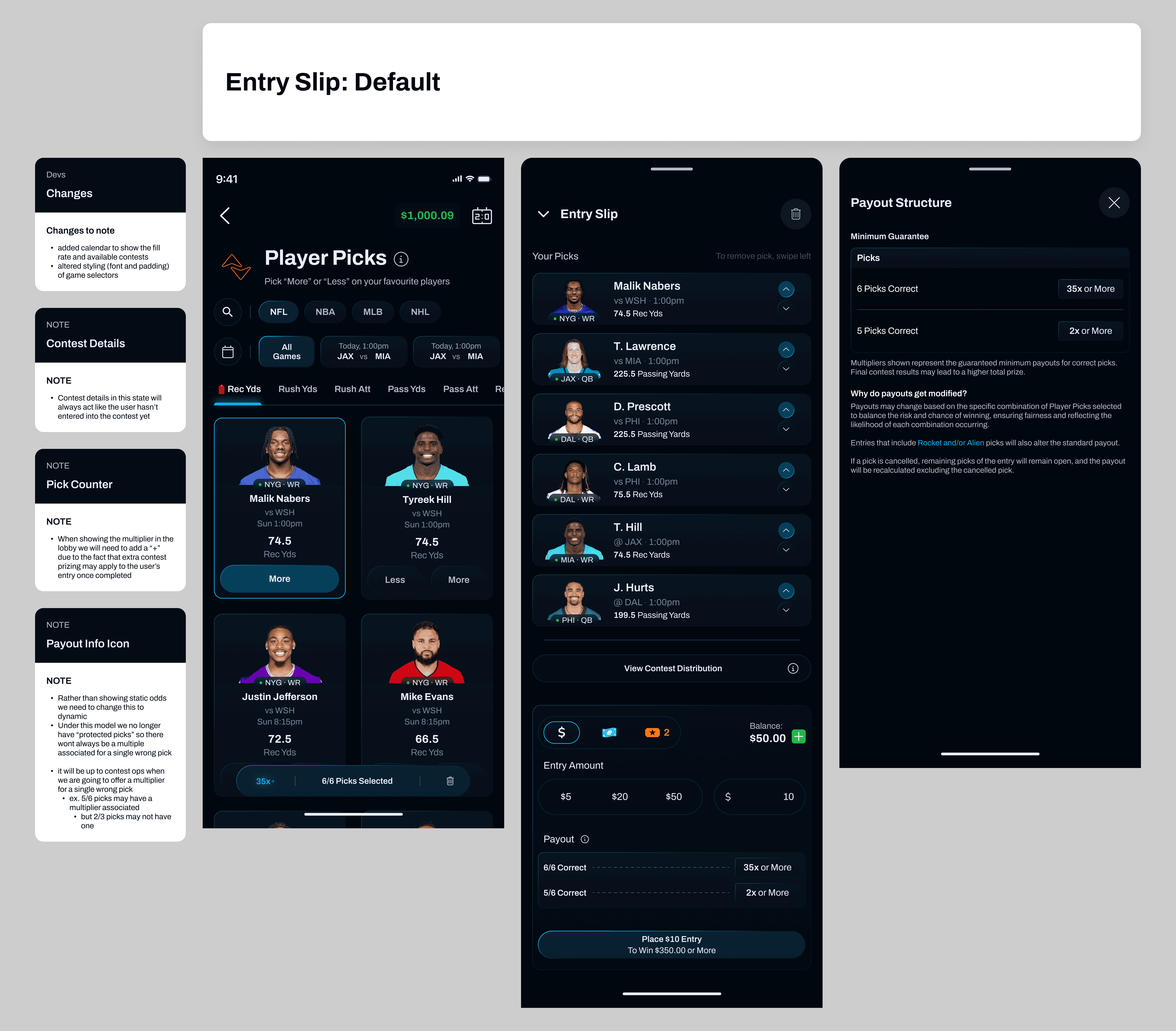
Key Screens
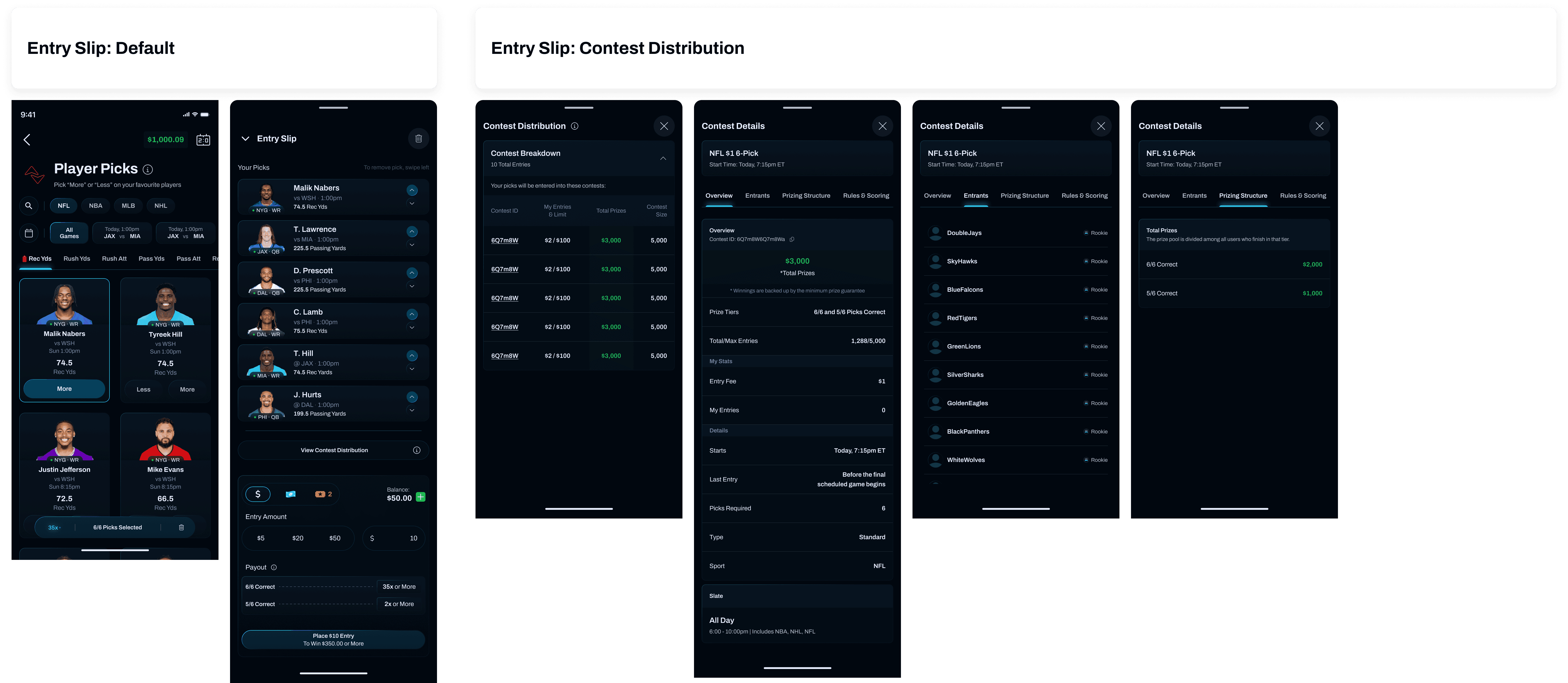
These screens capture the final direction for the prize pool model, showing key journeys from making the picks to tracking the contest live.
Testing and Validation
We ran internal tests to validate the new P2P elements and interaction flows. Insights reinforced the need for minimal friction and clear reward feedback for casual players.
Compliance review also played a crucial role! Our compliance officer validated at different stages of iteration to ensure the reduced information display still met legal criteria.
Challenges Faced
Navigating compliance-driven constraints without overloading users with detail.
Filtering out biased survey responses to arrive at authentic user insights.
Next Steps
The designs are now approved and documented with detailed dev notes. The engineering team is implementing, leading into QA and pre-launch testing. Once live, we plan to monitor user behaviour and engagement, looking for signals to refine the experience
💡 Expected Impact
Outcomes and Key Learnings
This project reminded me that even the most complex design problems can be solved when you’ve got the right people around you. Working closely with development and compliance pushed me to find that balance between vision and reality, and it taught me how much the small stuff matters.
If there’s one thing I’m taking away from this, it’s that compliance doesn’t have to feel complicated.