Project Details
Duration
6 Months
Core Team
1 Designer
2 PMs
2 Developers
Role
Product Designer
Category
Career
Overview
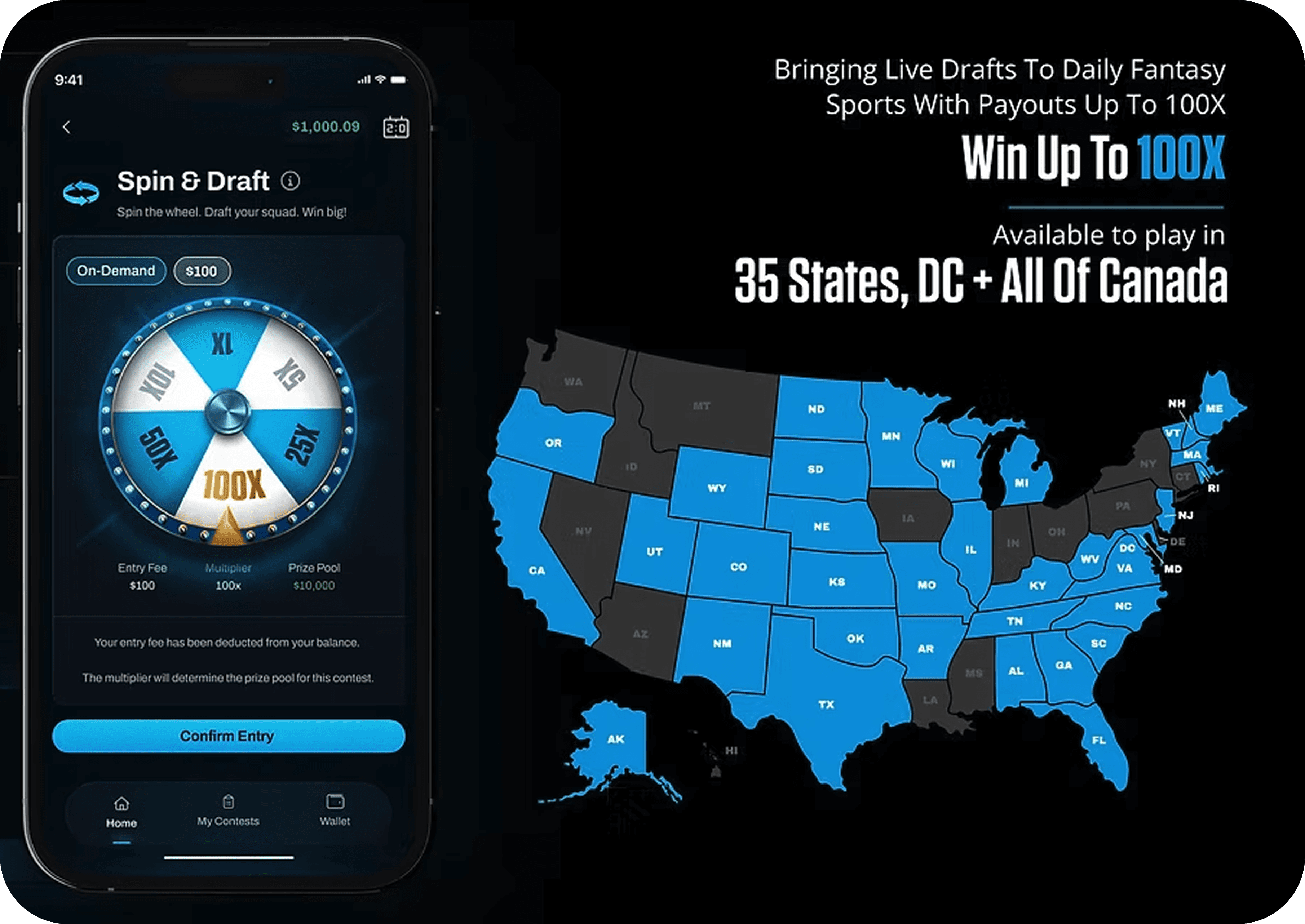
Spin & Draft started with a signal from our CEO: we wanted to bring a fantasy drafting game to the platform that felt familiar to daily fantasy players but had its own twist. The idea was simple on the surface: users join a contest, draft a team for that day’s games, then compete for a prize pool.
The hook is the spin. When users enter a contest, they spin a wheel that reveals a multiplier on potential winnings, with the chance to earn up to 100x their entry fee. My job was to turn that concept into a clear, fast, and repeatable experience that worked for casual users and met compliance standards.
Our Process
Discovery and Research
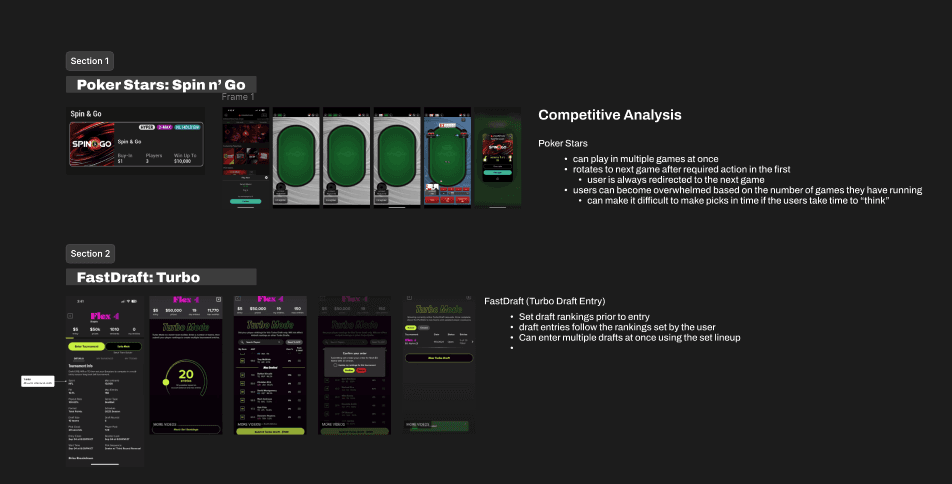
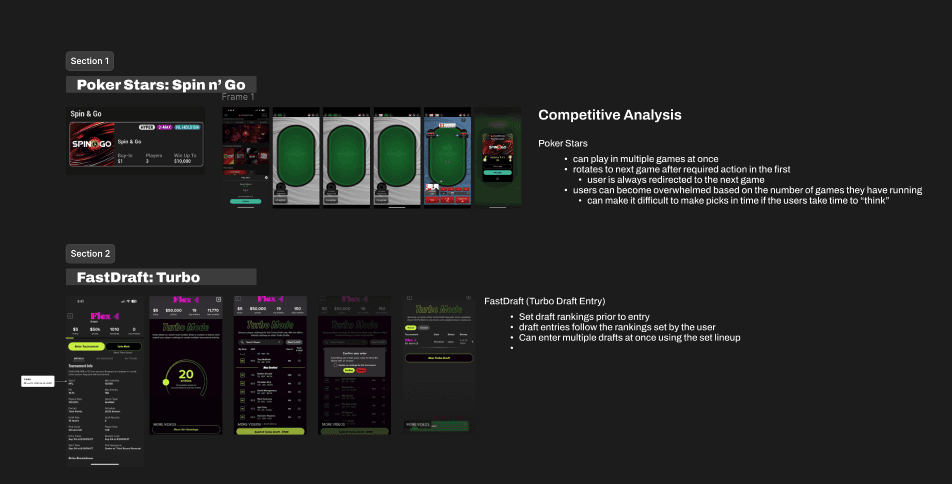
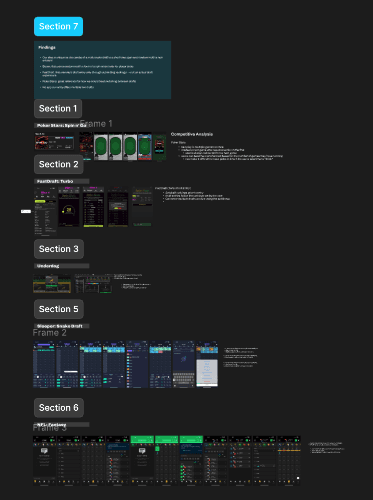
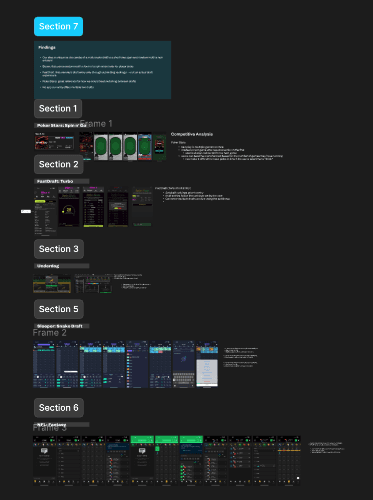
No direct DFS competitors had this exact game, so I cast a wider net. I audited season-long fantasy apps (roster layouts, player info hierarchy) and dug into poker apps, specifically blitz-style formats where players juggle multiple high-pressure tables simultaneously. That poker research was crucial; it showed me how to structure rapid decision-making under timers.
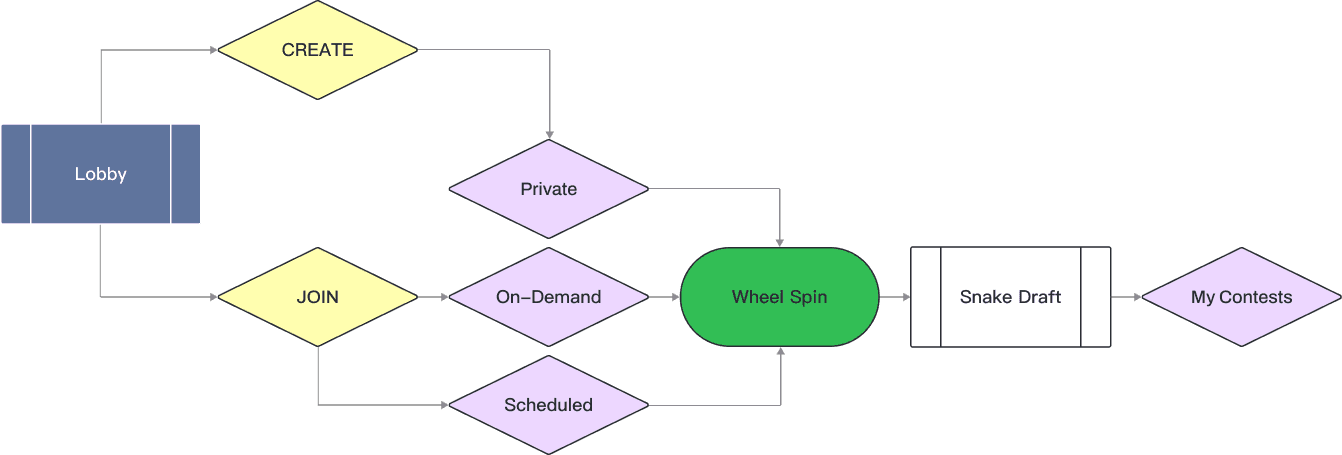
The weekly cross-functional syncs helped us nail the core structure: users enter via "on-demand" or "scheduled" lobby tiles, spin for multipliers, draft in real-time against others, then track lineup performances. This blitz-style foundation set the strategic direction.
Lobby Design and Entry Flows
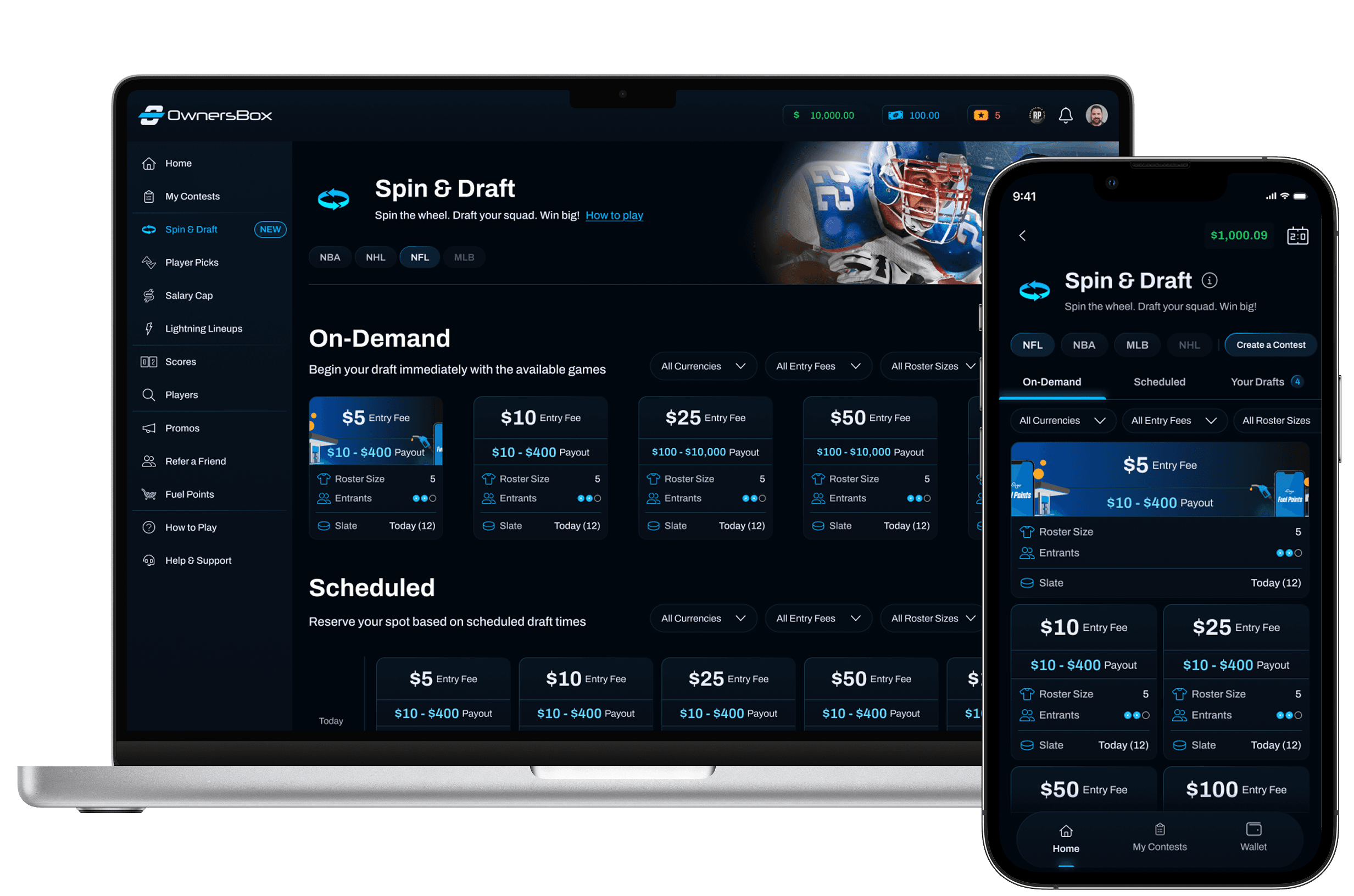
The lobby had to convert browsers to payers. I prioritized the five pieces of information users actually need for wallet decisions: roster size, current entrants, entry fee, max payout, slate.
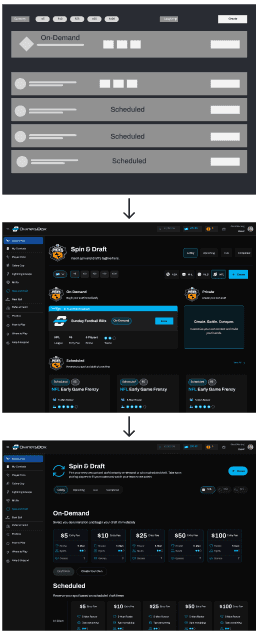
Each denomination became a scannable tile above the fold. On-demand was designed for imminent starts, Scheduled prioritizes start times. Iterative reviews with the team confirmed this structure.
Drafting Screen: Core Experience Design
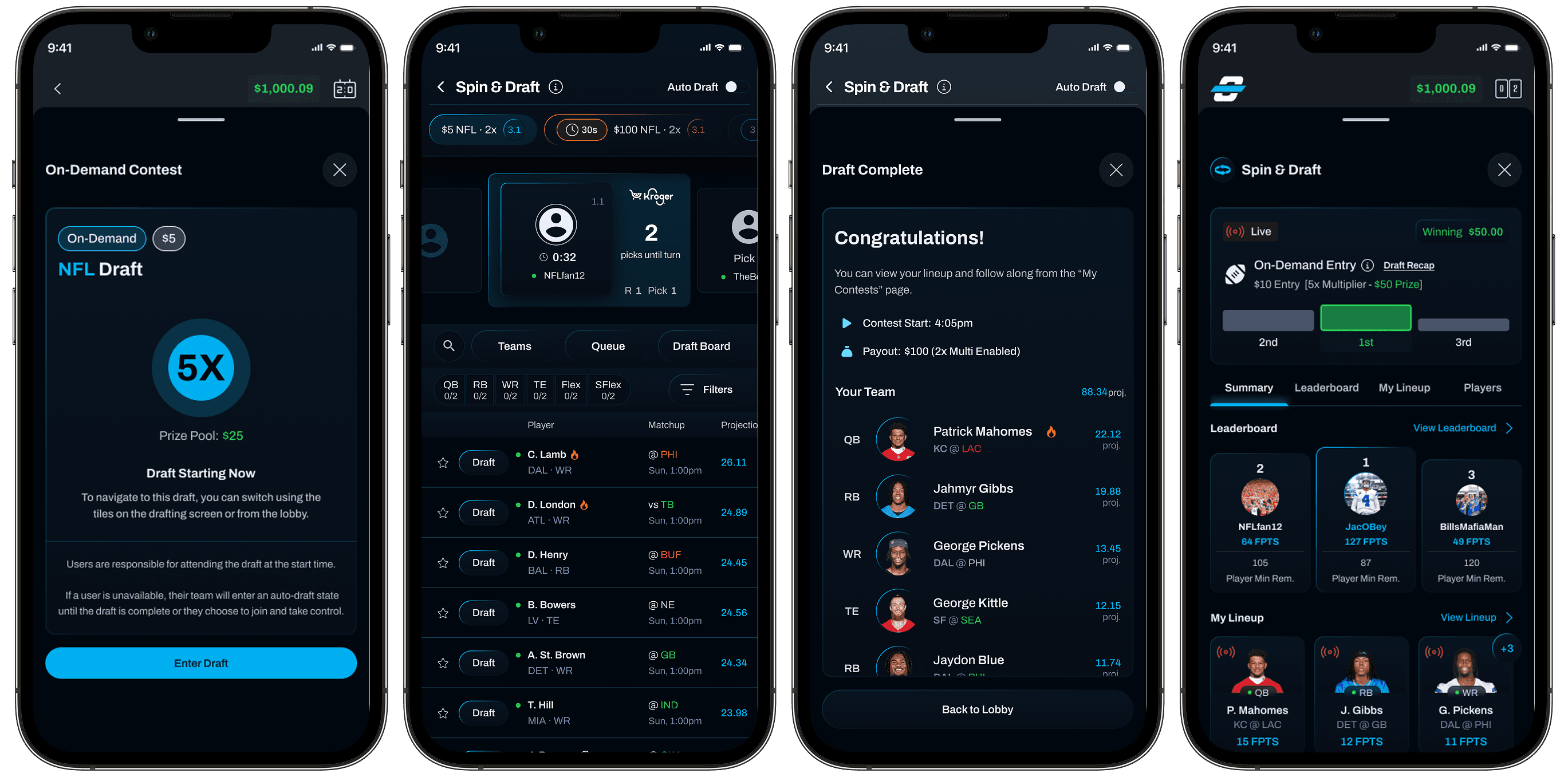
This was the hardest screen to get right; real-time drafting across potentially multiple contests, all under 30-second pick timers.
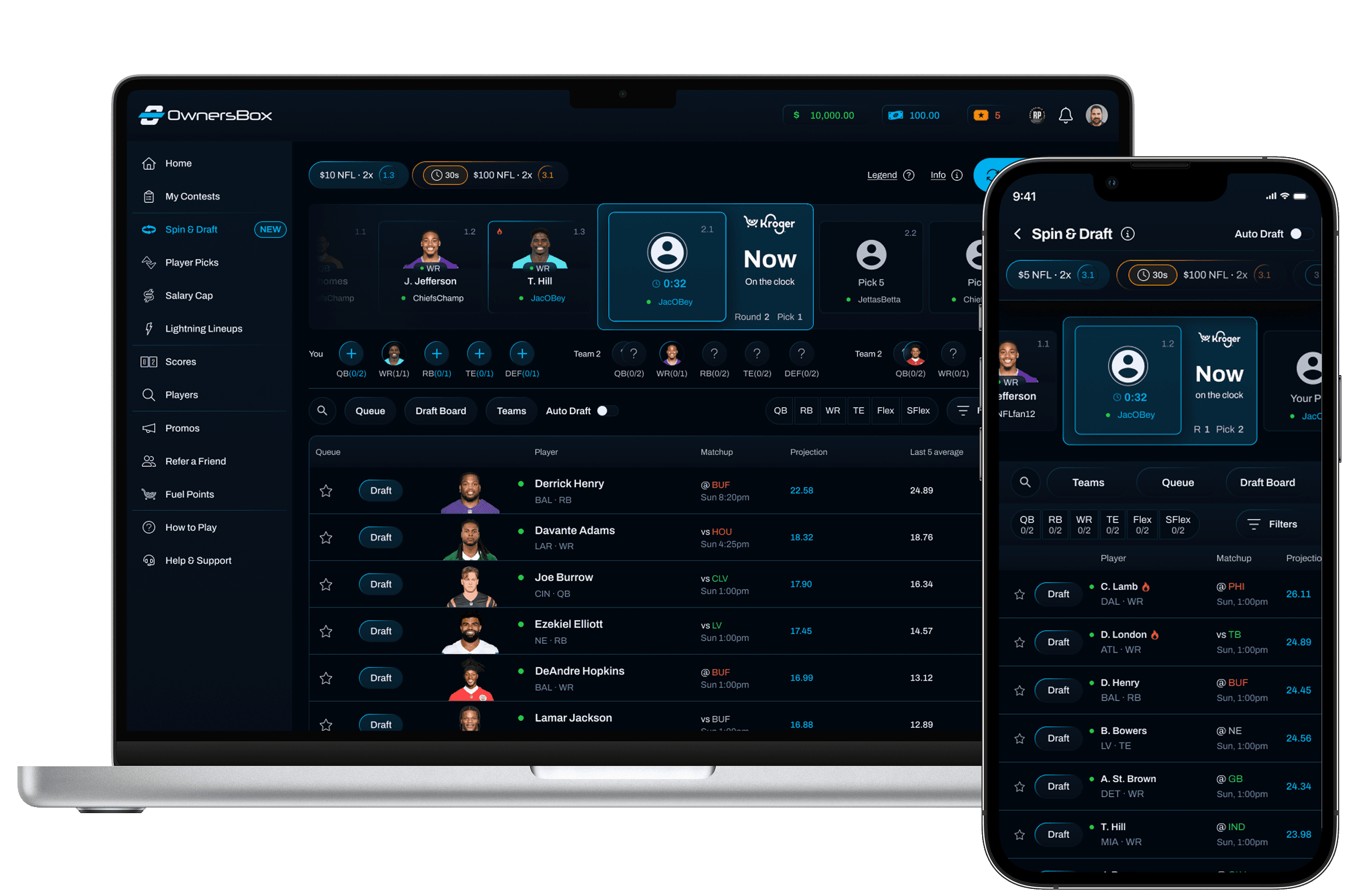
Player list shows decision-critical data: position, status, matchup, averages.
Draft timeline anchors show "on the clock" users in center, shifts completed picks to the left, shows upcoming picks to the right (user's turn always highlighted).
Multi-draft switcher lives at the top with a pick clock, round/pick status, and urgency states for timers running low.
Tools layer keeps navigation fast: position/team filters, player search, draft board view, auto-draft toggle. Internal prototype testing confirmed users could filter, search, and switch drafts fluidly.
Compliance and State Approvals
Brand-new games face intense regulatory scrutiny. I led internal compliance walkthroughs, surfacing participant experience levels and draft transparency throughout.
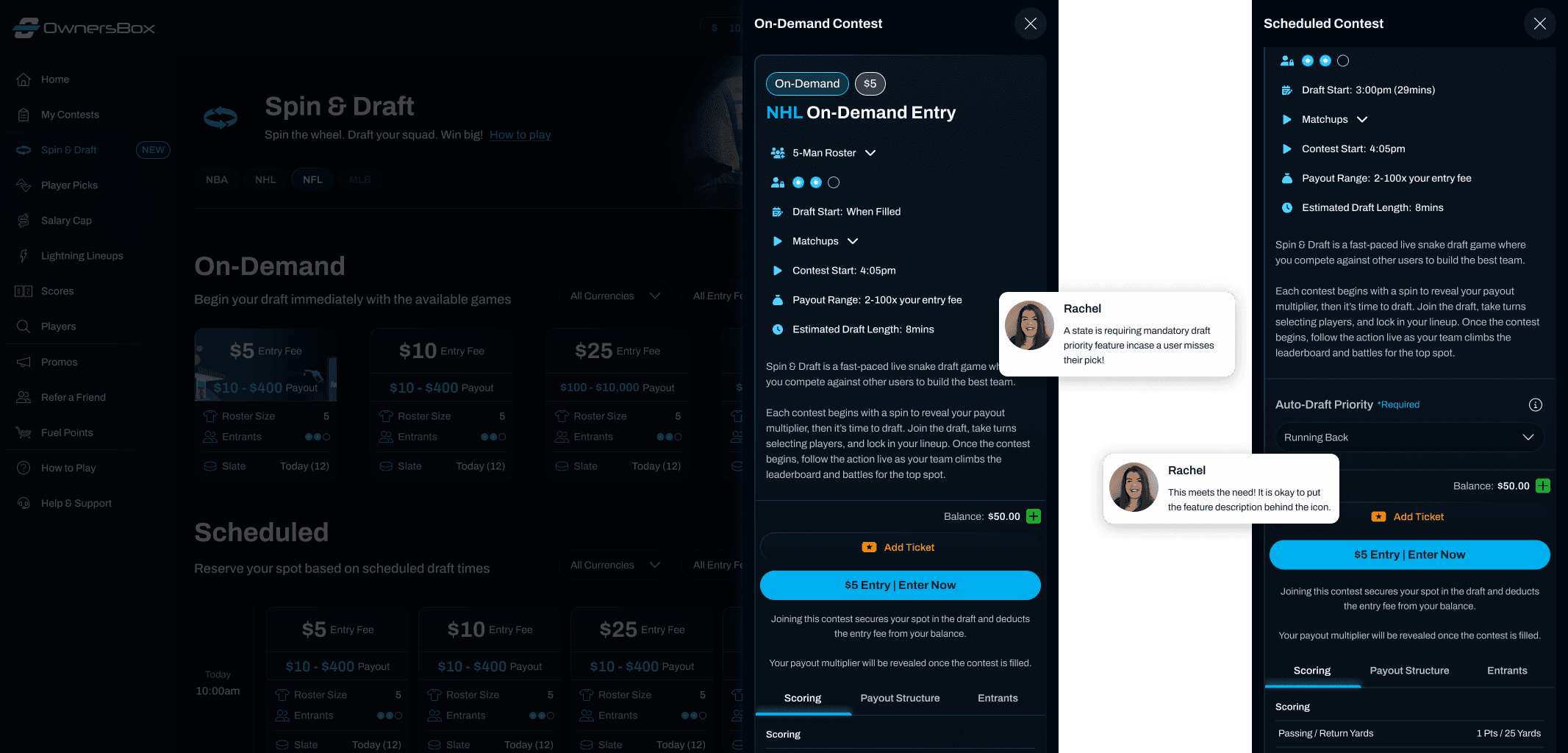
One state required position-preference selection at entry (for auto-draft fallback). I integrated this cleanly with the existing design without sacrificing the expected experience.
Every design had passed internal review and multi-state approval. Full documentation and dev handoff followed immediately.
Testing and Validation
Pre-launch: Internal prototype testing validated interaction speed across the full flow.
Post-launch: User survey + usage data showed strong adoption but flagged one clear friction. Users felt drafts took too long to start despite the intentional prep timer.
Solution: Added a "Ready Up" button for users who felt ready and wanted to bypass the remaining wait time. All users in the draft need to ready up for the draft to begin using this feature. This allowed users to take control of their experience and speed the process up if they felt ready.
Key Screens and Flows
Challenges Faced
Designing for regulatory approval for a totally new game across multiple states
Surfacing large amounts of data on the drafting screen while keeping it scannable
Helping users juggle 3+ drafts at once without getting lost
Impact
Next Steps
Ready Up feature rolling out to address launch feedback. Long-term monitoring will track:
Draft completion rates
Multi-draft session length
Cross-game retention lift
We'll keep monitoring user behaviour closely and acting on feedback as needed.
Outcomes and Key Learnings
Spin & Draft delivered 1150+ drafts and 48% repeat engagement in its first month. This shows clear validation of the lobby-to-draft progression and blitz-style structure.
The biggest takeaway? Always put yourself in the user's shoes. When you're 20 iterations deep into complex flows, step back and ask, "If I jumped into this after work on a Tuesday, what's the bare minimum I need to feel good about playing?" That mindset shaped everything from the lobby layout to the timer feedback.